On this page
Owning a car costs more than its loan payment and gasoline. Insurance, repairs, tires, registration and the loss in resale value all belong in the picture. Some leave the bank account every month; others arrive in a lump or become visible only when the car is sold.
AAA’s September 2026 report provides a current new-vehicle benchmark. A household budget then needs a second step: replacing the study averages with the vehicle’s payment schedule, insurance quote, annual mileage and local fees. The benchmark describes a study of new vehicles, not the bill for every used car on the road.
Key figures
- $9,259 AAA yearly ownership cost, small sedan
- $16,449 AAA yearly ownership cost, half-ton pickup
- 15,000 miles Yearly mileage behind AAA ownership estimates
Vehicle size changes the published annual cost
AAA models new-vehicle ownership over five years and 75,000 miles. Its main 2026 analysis covers seven categories. The annual totals below correspond to 15,000 miles per year and include operating expenses as well as depreciation and finance charges.
| Vehicle category in AAA’s 2026 study | Total annual cost at 15,000 miles | Published total cost per mile |
|---|---|---|
| Small sedan | $9,259 | $0.6173 |
| Medium sedan | $10,555 | $0.7037 |
| Subcompact SUV | $10,752 | $0.7168 |
| Compact SUV | $11,670 | $0.7780 |
| Medium SUV | $14,447 | $0.9632 |
| Midsize pickup | $13,089 | $0.8726 |
| Half-ton pickup | $16,449 | $1.0966 |
Source note: AAA, Your Driving Costs 2026 brochure, main category analysis at 15,000 miles annually. Category figures are study averages for selected new models. They are not individualized insurance quotes or used-car operating estimates.
- Small sedan$9,259
- Medium sedan$10,555
- Subcompact SUV$10,752
- Compact SUV$11,670
- Medium SUV$14,447
- Midsize pickup$13,089
- Half-ton pickup$16,449
Source note: AAA, Your Driving Costs 2026 brochure, main category analysis at 15,000 miles annually. Category figures are study averages for selected new models. They are not individualized insurance quotes or used-car operating estimates.
The annual gap between the small sedan and half-ton pickup is $7,190 using the rounded table totals, nearly $600 a month. That is a more meaningful shopping comparison than a small difference in loan payment. Size, purchase price and resale performance can outweigh one attractive running-cost number.
AAA also changed its methodology in 2026, integrating selected electric and hybrid vehicles into categories that previously used conventional gasoline models. Its press release cautions against directly comparing the new overall result with the 2025 estimate. A year-to-year subtraction should not be presented as a clean measure of price inflation.
A cash budget and an ownership-cost model answer different questions
A cash budget asks whether the bills can be paid when they arrive. Include the down payment, scheduled loan installments, fuel or electricity, insurance, maintenance, parking, tolls and government charges. An annual insurance premium can be divided into a monthly reserve even when the insurer collects it all at once.
An ownership-cost model asks how much transportation consumes economically. It includes depreciation and interest, but does not count loan principal as another expense on top of depreciation. Principal builds ownership in the car; depreciation measures the value lost while it is owned.
For an example, a $30,000 purchase sold later for $18,000 has lost $12,000 in value. Dividing that loss across an assumed five-year holding period gives $2,400 a year in depreciation. The purchase and resale prices are illustration inputs, not predictions for a model. Adding the entire $30,000 principal repayment to that $12,000 loss would count the purchase twice.
The depreciation guide develops the resale side. For monthly affordability, keep the loan payment visible even though principal is excluded from the economic-cost total. A car can be affordable on one measure and uncomfortable on the other.
The loan payment contains more than interest
The CFPB explains that financed optional products can sit inside the monthly auto-loan payment alongside principal and interest. A service contract, credit product or GAP charge does not disappear because it is spread over the term. It can also incur interest when financed.
Use the lender’s amount financed, APR, payment count and total payment schedule to identify the borrowing cost. A longer term can lower the monthly installment while increasing the interest paid. The refinance cost comparison shows that effect with equal starting balances and different payoff dates.
For a purchase, the first-year cash requirement also includes cash paid at signing and any upfront costs outside the loan. Distinguish sales tax financed in the agreement from a separate registration renewal due later. The car buying and selling budget keeps those transaction expenses together.

Mileage converts fuel efficiency into an annual bill
For a gasoline car, annual fuel cost equals miles driven divided by miles per gallon, multiplied by dollars per gallon. An example 12,000-mile year at 30 mpg uses 400 gallons. At an assumed $4 per gallon, that is $1,600 a year, or about $133.33 a month. The $4 figure is a worksheet assumption, not a current national pump-price claim.
At the same mileage and price, 20 mpg consumes 600 gallons and costs $2,400. The efficiency difference therefore changes the annual fuel bill by $800. Use the vehicle’s observed fuel economy when available rather than assuming a label estimate describes every route and season.
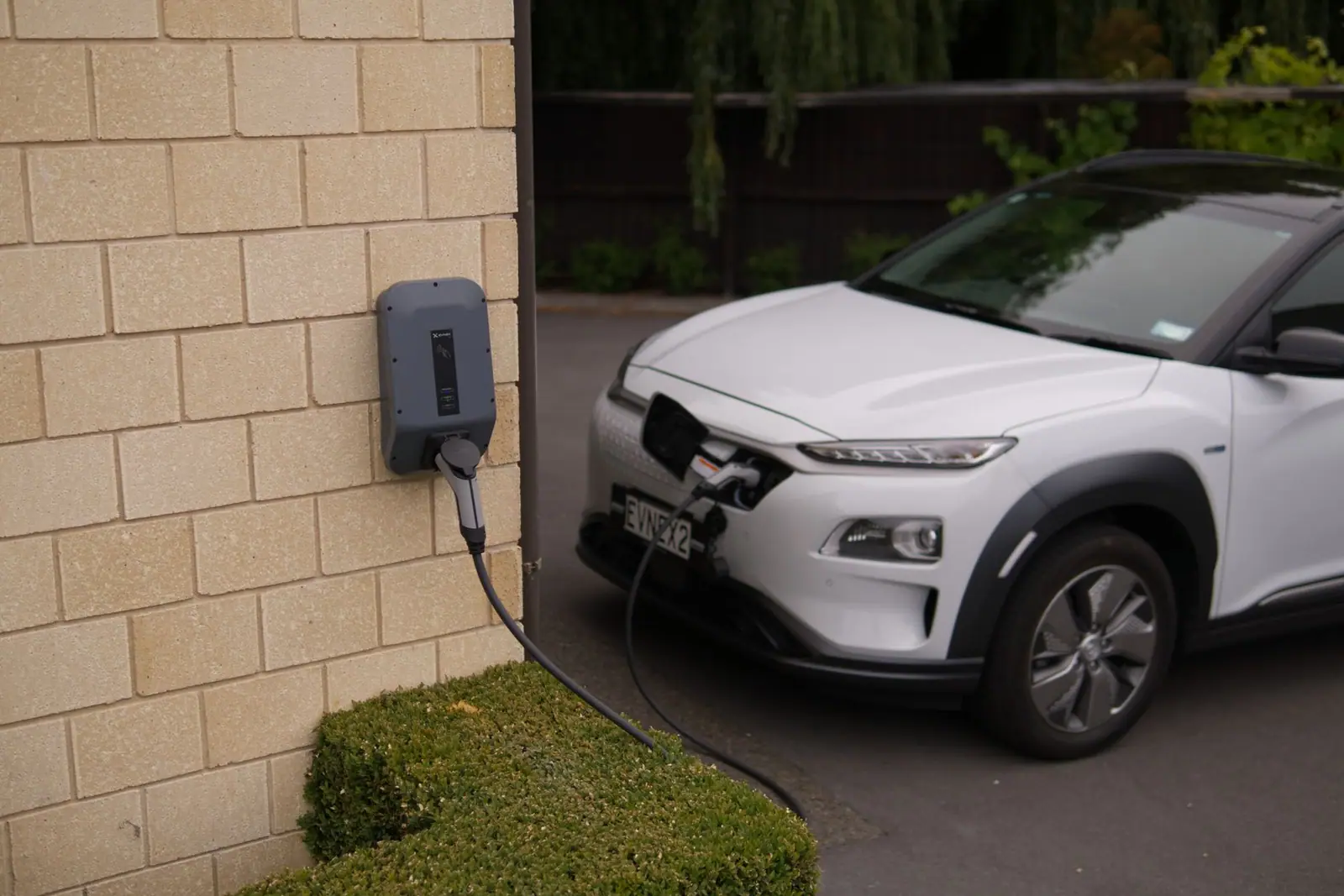
For an EV, use energy purchased at the meter and the tariff that applies when charging. Public fast-charging purchases can have different prices from home charging. Do not silently apply the cheapest overnight rate to every mile. Installation costs and charging equipment belong in the purchase budget separately.
The electric-versus-gas running-cost guide covers that comparison. Fuel savings are one component of ownership; the car’s purchase price, insurance and resale loss remain separate components.
Irregular bills need a reserve before they arrive
Registration, a set of tires and a scheduled service do not follow the lender’s monthly rhythm. List the amounts and due dates from the renewal notice, service schedule and quotes. Divide expected expenses by the months available to fund them, rather than treating each bill as an unexpected event.
For an explicitly assumed $600 annual maintenance reserve, setting aside $50 a month funds that amount. It is not a claim that every car needs only $600 of work. A high-mileage vehicle facing a timing-belt service or known repair requires a larger and earlier reserve based on its schedule and estimate.
AAA’s $12,863 benchmark includes depreciation and finance charges. It is not a monthly cash payment to add on top of a loan installment. Use the study to compare categories, then use documents and mileage to build the household’s bill schedule.
Review the budget after the first several months of ownership. Replace assumed mileage and energy use with records, retain the insurance and fee amounts from current documents, and note repairs separately from routine maintenance. A budget that records what changed can explain whether the car is expensive because of its financing, its running costs or its resale value.
Questions people ask
What is the average new-car ownership cost in 2026?
AAA's main 2026 analysis reports $12,863 annually at 15,000 miles per year, about $1,071.92 a month. It models selected new vehicles over five years and 75,000 miles, so it is not a quote for an individual household.
Should loan payments and depreciation both be added?
Show payments in the cash-flow budget. In an economic ownership-cost model, count depreciation and interest, but do not add loan principal again as an expense. That would double-count the vehicle purchase.
How much does fuel economy change the budget?
With the example's 12,000 annual miles and assumed $4 gasoline, 30 mpg costs $1,600 a year and 20 mpg costs $2,400. The $800 difference changes with mileage, pump price and observed fuel economy.
Does AAA's average describe an older paid-off car?
No. Its main study models new vehicles, financing and depreciation. A paid-off older car needs its own repair history, insurance, registration, fuel and resale assumptions rather than the new-vehicle average.
Where these figures come from
- Your Driving Costs 2026 category tables AAA · newsroom.aaa.com
- 2026 ownership costs and methodology changes AAA — The Auto Club Group · newsroom.acg.aaa.com
- Items included in a monthly auto-loan payment Consumer Financial Protection Bureau · consumerfinance.gov
- Comparing APR, amount financed and loan length Consumer Financial Protection Bureau · consumerfinance.gov
Figures last checked October 2026.